Every day, you make sure you look pretty for the outside world. Every day, you do your best to keep up with the world’s expectations.
You make sure your hair is done, your makeup looks nice, and your outfit is neat and tidy, and then you’re off to go.
As a girl, people don’t always expect you to speak up or enjoy certain hobbies like gaming or even sports.
Throughout your day, you try to keep up a sweet performance, whether that means smiling and waving or being obedient toward others.
There are societal rules and expectations for how girls should act, what they should wear, and what they should be interested in. These expectations can weigh on someone from the moment they are born, following them no matter the environment. But when did gender become a limitation?
Aaliyah Quintero, a student at Torrington High School, shared her thoughts on the stereotypes she faces.
“I think common stereotypes, at least for me specifically, with the fact that I am a minority, they assume certain roles for me to take on and assume that maybe I wouldn’t be a part of certain events like student council, or things you would normally see other kinds of people do,” Quintero said. “They see me as somebody who doesn’t take it seriously, but I actually do.”
According to United Nations Development Programme>, the latest Gender Social Norms Index report revealed no improvement in biases against women in a decade, with nearly nine out of 10 men and women worldwide still holding those biases. UN Women> also reports that around 73% of people globally say they regularly see or hear gender stereotyping.
“I feel like these stereotypes form not because it’s entirely deeply rooted in misogyny, but because they come from negative or surface-level viewpoints,” said Ahnia Rivera Santana, another student at THS.
As a girl, femininity is often associated with being vulnerable or fragile, but it doesn’t always have to be that way. Who are you beyond the way others choose to see you?
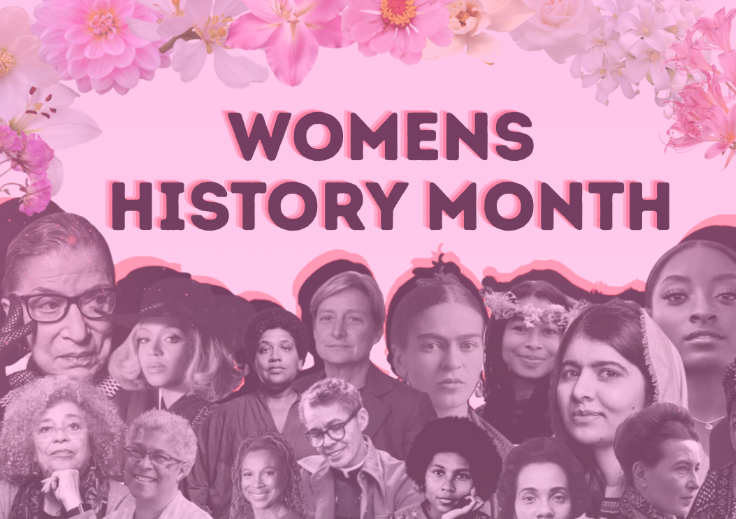
PubMed Central reports that throughout history, women have often been portrayed as secondary to men through media, education, pop culture, and other narratives. Women are frequently depicted as supporting characters or one-dimensional caricatures.
These narrow stereotypes placed on girls are common in schools, workplaces, and many other environments where women are judged differently based on gender expectations.
There is still a common suggestion that girls are not capable of everything boys can do, but that is simply not true. Being a girl does not take away someone’s ability to succeed, lead, or be qualified for something. Girls can be just as intelligent, capable, and strong as anyone else.
At the end of the day, we are all human, and we should support and understand one another, no matter what gender we are.