





















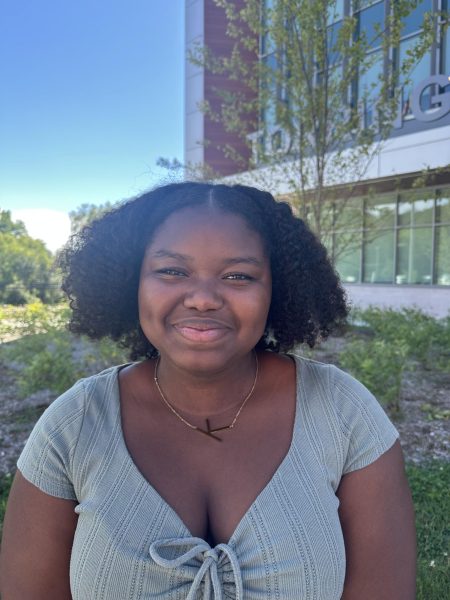
Kajeda Fraser is a current senior attending THS. Kajeda is very active in her school as well as in the Torrington community. She is currently participating in Student Council as Senior Class President, Black Student Union as President, the Model United Nations Club as Ambassador of Finance, and on the Track & Field team. In her community, she volunteers with the YMCA year-round, with the Torrington Youth Service Bureau during Christmas time, and serves on the Mayor’s Committee on Youth as President during the school year. After high school, she plans to attend UCONN in the fall to study finance. In this newspaper, her goal is to write about more worldly topics that will interest the students of THS. In her free time, she enjoys trying out new recipes and reading “Chick Lit.”
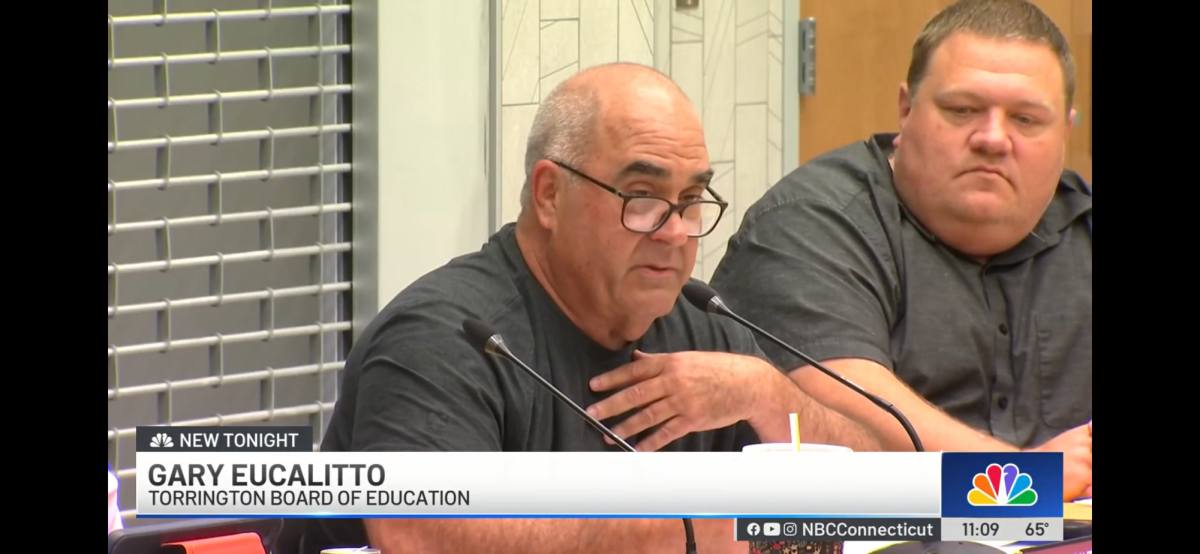
The Torrington Board of Education is no stranger to controversy, and its Policy Subcommittee continued that tradition at its most recent meeting, where members took up a discussion that could fundamentally reshape the classroom experience for students across the district: the future of the one-to-one computer policy.
For those who don’t know, the Board of Education serves as the governing body for the Torrington Public School District. It sets policy, approves budgets, and ensures schools operate effectively. The board is made up of subcommittees, which meet to discuss specific issues and then send them to the full board. The Policy Subcommittee is one such body. Its role is to consider, debate, and put forth policy suggestions that the full board then votes on for district-wide implementation. In short, what gets discussed in that room has a real chance of affecting what happens in our schools.
At the center of last night’s debate was subcommittee chair Gary Eucalitto, who wants to eliminate the district’s current one-to-one device policy. This is the program that gives each student a tablet or Chromebook. Eucalitto argued that the shift away from personal devices and toward shared computer carts or dedicated computer labs was not just preferable, but necessary. He repeatedly cited studies he described as demonstrating the dangers of excessive screen time for students, though he did not name the specific research during the meeting.
Eucalitto did acknowledge that any new policy may need to look different across grade levels. Still, his position was clear: computers in the hands of every student, every day, is a model he believes the district should move away from.
Not everyone at the table was ready to write the policy just yet. Board member Jeff Putnam urged caution before any formal language was drafted. Putnam called for more detailed data on how students are actually using their devices, such as how long they are on computers during the school day, what platforms and programs they are using, and what the educational purpose of that use is.
TMS teacher Jason LaFreniere, the Torrington Education Association’s liaison to the Policy Subcommittee, raised concerns about the potential policy. LaFreniere emphasized the importance of meeting the educational needs of students, warning against an approach that is too restrictive. “We are looking to create 21st-century learners,” he noted, and a sweeping rollback of technology access could undermine that goal.
LaFreniere also pushed back on the research Eucalitto cited throughout the meeting, arguing that many of the articles and studies shared were narrow in their scope or painted a complex issue with broad generalities. He cautioned against an all-or-nothing policy and urged the board to research and poll students, teachers, and parents about how usage differs from one classroom, grade level, and subject to the next.
Eucalitto argued against such a poll, insisting specifically that students would not be an objective source of feedback.
The one-to-one computer policy discussion is still in its early stages. No formal policy language has been drafted, and Putnam’s call for data suggests the subcommittee is not yet ready to bring a recommendation to the full board. But as with any line on a board agenda, that can change quickly. A show of hands is all it takes.
Student Voices: Dress Code and Diversity
Students do a voice at these meetings, however, in the same way as the general public. The debate over classroom technology was not the only issue discussed last night. Public comment at Board of Education meetings offers community members — including students — a direct line to the people making decisions about their schools. Two Torrington High School seniors took that opportunity seriously.
Ella Le appeared before the Policy Subcommittee for the second time this year to speak out against what she and many of her peers describe as an overly strict dress code policy that unfairly targets female students. Le’s repeated appearances underscore a frustration that has not gone away since the board adopted a formal dress code, a policy that passed by a 7-3 vote at September’s regular meeting amid some confusion over its final language.
Board member Kristine Conway and Lafreniere spoke at the February policy committee about changing the language of the student dress code, but were in the minority. Conway brought it up at the end of last night’s meeting, in light of a recent change to the staff dress code and Le’s comments, for discussion at the May meeting.
Kajeda Fraser, also a senior, addressed the subcommittee on a different but equally urgent topic. Fraser referenced a recent Raider Report article that brought to light experiences of racism at Torrington High School, and used her time at the podium to advocate for diversity training and implicit bias education for staff and students at THS. Fraser’s remarks are a reminder that the issues students care most about are not always found on the formal agenda.
Who is Making these Decisions?
What makes the Board of Education unique among governing bodies is that its members are not appointed; they are elected directly by Torrington voters. Every member of the board is a Torrington resident, chosen by the community to represent the interests of its students, families, and taxpayers. That means the people shaping school policy are neighbors, alumni, and parents. The board’s two newest members, Elena Sileo and Joseph Kulesza, were voted in this past November, and both are anything but strangers to Torrington.
Sileo previously served as a counselor within the Torrington school district, bringing firsthand experience of student needs to her new role. When asked about her goals for her term, she was direct: “My primary intention is to always act in the best interest of students.”
Kulesza, a Torrington High School alum and former member of the Boys Swim team, views his seat on the board as a personal investment in the town where he is now raising his daughter. “A safe and inclusive environment is essential for learning,” he said, a principle that feels especially relevant as the board takes up questions about how and whether technology belongs in the classroom.
Because board members are elected by and accountable to Torrington residents, community participation in the process matters. Anyone interested in school policy, budgets, or the direction of the district is encouraged to review meeting schedules and agendas — posted on the Torrington Public Schools website — and to show up, speak during public comment, and advocate for the changes they want to see. As Co-Chair Edward Corey has put it, “[anyone with] a burning passion for government” or for their community’s schools is “always welcome.”

daniel • Apr 6, 2026 at 11:20 am
they just be saying anything