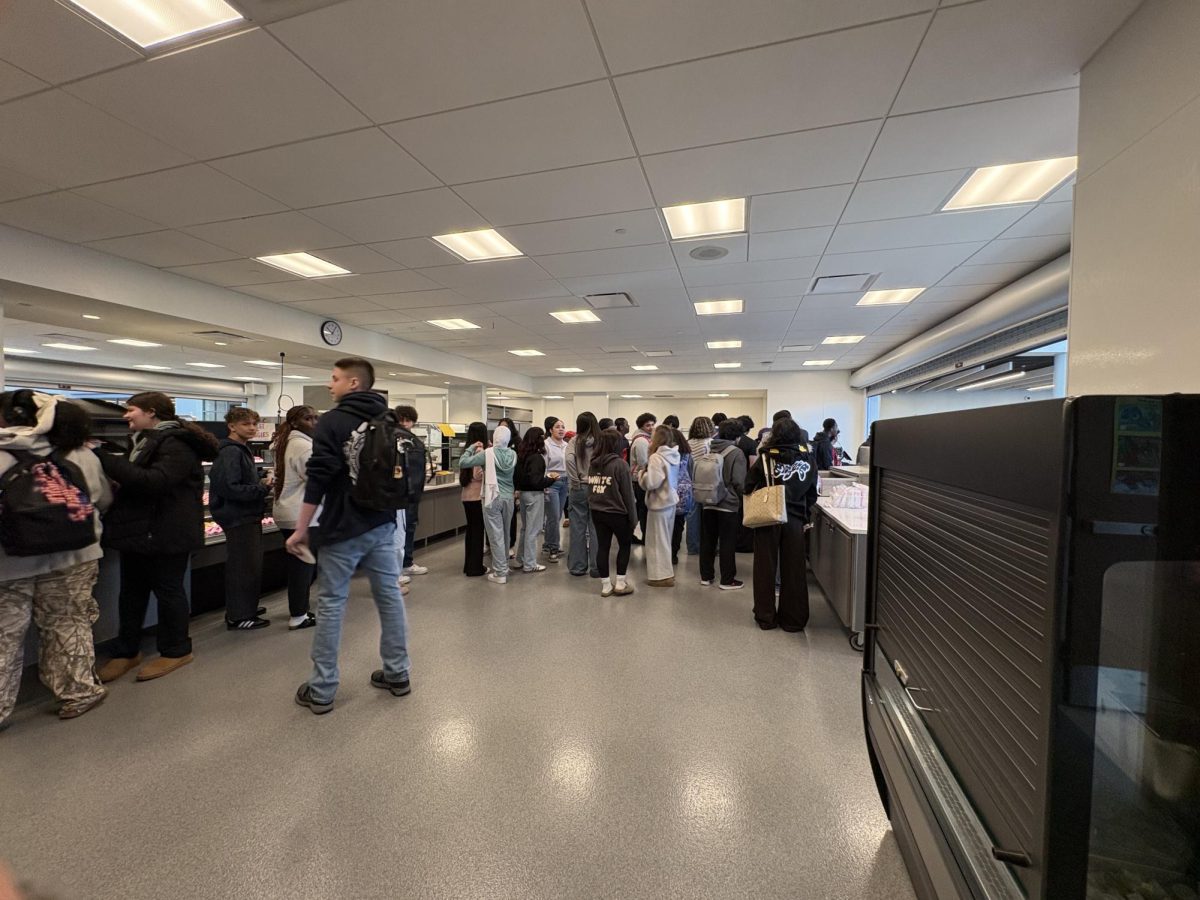


















You just got off your bus in the morning, waiting a cold five minutes outside before being let into the school. After setting your stuff down and chatting with your friends, you finally make your way to the breakfast line. But after grabbing a muffin and juice, you realize something: this line is way too packed.
Every morning, there’s a huge cluster of students waiting to put in their code and leave. Nobody is really in a line, and everyone is racing to squeeze to the front. Now you have to sit there and debate whether getting breakfast is even worth it, but you’ve already grabbed your food, so now you’re doomed to wait another five minutes before you can leave. Luckily, my bus gets here early, so I’m usually able to get breakfast before the cafeteria is completely packed, but not everyone is that lucky.
We only have about fifteen minutes for breakfast, and there have been plenty of times when my friends and I are just getting out of line as the bell rings right when we take our first bite. Since buses don’t all arrive at the same time, it’s worrying that some students may not even get the chance to eat breakfast — the most important meal of the day. According to the CDC, breakfast consumption is positively associated with academic achievement and diet quality among students, while skipping breakfast has been linked to poorer mental health.
I would often have to decide if being late to class was worth eating breakfast that morning, and with no food allowed in classrooms, it can make for a rough start to the day if you don’t eat. Trying to focus in class suddenly becomes an Olympic sport, like the gears in your brain don’t have enough oil to keep turning.
The cafeteria staff works hard every morning, and the issue is not about effort. The real problem is that too many students are trying to get through the system in too short of a time. Before next school year, the school should look at ways to improve the breakfast process so students can actually have enough time to eat. Whether that means adding another checkout station, adjusting arrival procedures, creating separate lines, or extending breakfast time by a few minutes, something needs to change. Breakfast should not feel like a race every single morning, especially when it plays such an important role in helping students stay focused and ready to learn.