

















Devin Ballard is currently a senior at Torrington High School. He is part of the outdoor and indoor Torrington track and field teams and is a member of the Black Student Union. This school year, he hopes to earn good grades and run well during his track seasons. After he graduates, he plans to attend UConn to study psychology and neurology. Outside of school, he likes to go on runs and hikes. Most of all, he enjoys spending time with his dog, Luna. Through the Raider Report, he hopes to make all students feel heard and recognized.
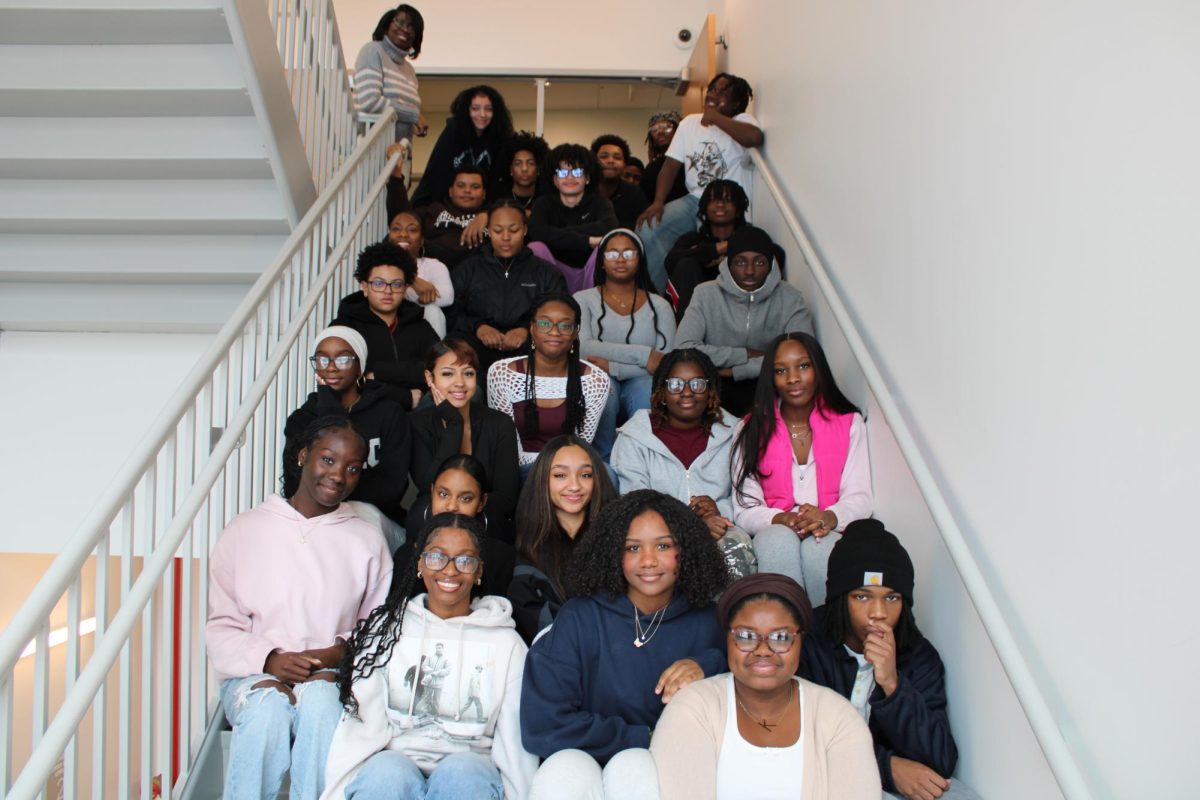
Members of Torrington High School’s Black Student Union
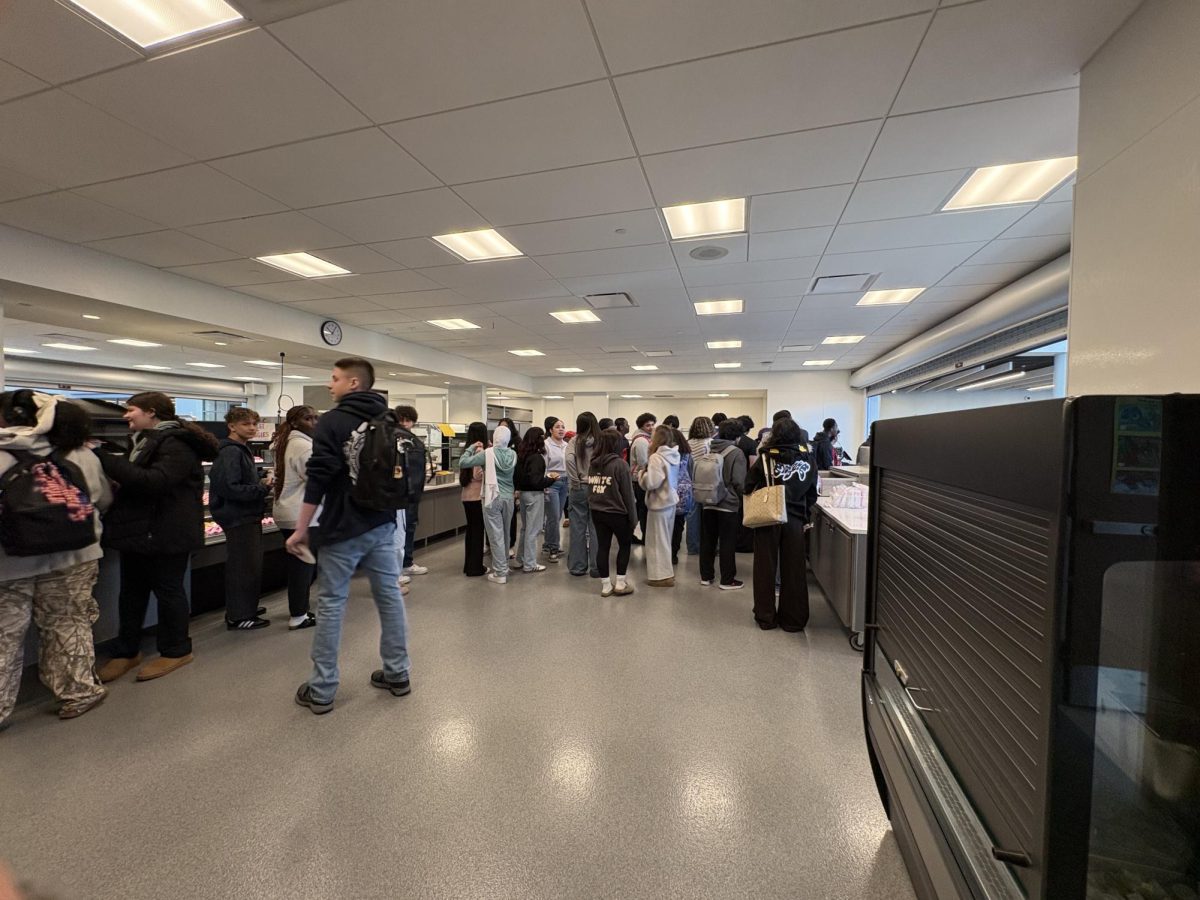
It’s silent in the cafeteria. The conversation fades as all eyes turn toward the student at the microphone announcing an upcoming school event. For a brief moment, the room feels unified and focused. Then something cuts through the silence. “Shut up, n****r!” The word echoes through the cafeteria. It doesn’t come with laughter. It doesn’t spark outrage. It simply lands heavy, ugly, and deliberate. No one turns their head. No one scans the room to see who said it. No teacher rushes forward. The speaker hesitates for half a second, then continues speaking as if nothing happened. A few students shift in their seats. Most don’t react at all.
And just like that, the moment passes. The event gets announced. Lunch resumes. The word lingers. This is what racism can look like at Torrington High School, not always dramatic, not always headline-worthy, but present in ways that it’s been normalized enough to be ignored. It doesn’t always appear as confrontation or conflict. Sometimes, it appears as a joke shouted across a cafeteria. Sometimes, it appears as silence.
The most disturbing part wasn’t what was said. It was how quickly everyone moved on.
Racism does not always appear in obvious or extreme forms. Often, it is hidden within stereotypes or subtle comments that are passed off as jokes and brushed aside as harmless. While these remarks may seem small, they can leave a greater impact than most realize.
Racism at Torrington High School often goes unnoticed, not because it isn’t happening, but because it is frequently minimized. In a recent survey, 101 THS students shared their thoughts and experiences with racism. Although the second most common response claimed that racism is “not at all” an issue, many of those same students went on to describe experiences they had witnessed or personally faced. This contradiction reveals how racism is often viewed within the school community: something that was once taken seriously is now brushed aside. What one person may see as harmless humor can be experienced by another as a genuine issue, leading to feelings of disrespect or being silenced. By examining these experiences, it can be seen how racism has shifted from a recognized problem to something more often dismissed as just a joke.
Principal Brian Scott acknowledged that many incidents involve racially charged language that students may view as humor. “In most cases, it’s a situation where either the student is comfortable using a certain language due to cultural background,” he explained. “In other cases, it’s students using the term thinking they’re being humorous, but it is not being received in a humorous way.”
He added that students are sometimes “a little bit too tolerant” of these situations, which makes it harder for administrators to address them.
While many students claim that racism is not an issue at THS, responses to the survey reveal how often it is dismissed as humor rather than recognized as harm. Several students described racism as something casual, often used to get a laugh within a group of friends. One anonymous student stated, “A lot of the time, racism is performed as jokes towards friends who are of the same race, who, most of the time, do them back. Mostly it’s just goofy, like friends between friends that are just trying to have fun or just laugh a little.” But even though it’s seen as humor, it doesn’t make it less harmful.
Despite this, other students described incidents that went beyond harmless jokes and reflected more blatant racist behavior within the school. For some students, these are not isolated moments, but part of a larger issue that leaves them feeling unsupported when they try to speak up or ask for help. Another anonymous student reported, “I never got justice for what was done to me… they got let off on a warning after they bullied me all the time, and I had so much proof.”
To better understand how racism is experienced and addressed at THS, interviews were completed with both student leaders and faculty members.
Kajeda Fraser, president of the Black Student Union, spoke openly about witnessing the use of slurs, offensive language, and microaggressions within the school. Fraser also shared that teachers, whether intentionally or not, have made racially insensitive comments in the past. She described times where teachers attempted to “talk Black” to her by using phrases like “hey, girlfriend” and similar remarks.
Fraser emphasized that although THS is a diverse school, little has been done to educate students on racial sensitivity. During the interview, Fraser stated, “When you get into a public school system, it’s a very diverse community, but until five years ago, we were majority white. Now we’re majority Latino and Hispanic, but you still don’t see anything on racial sensitivity or what to say and what not to say.”
The formation of the Black Student Union itself came after concerns about bias and microaggressions were raised. Principal Scott explained that a few years ago, students brought forward concerns about unfair treatment and unrecognized bias within the building. Those conversations eventually led to the creation of BSU, which he described as an important step toward raising awareness and respect for diversity.
In contrast, Jonathan Cahill, head coach of track and field and a mathematics teacher at THS, offered a more neutral perspective. Cahill explained that racism may not be viewed as a widespread issue because it is often evaluated on a situational basis rather than a pattern. When asked about survey responses in which students reported experiencing racism while still claiming it was “not really” an issue, Cahill said, “Maybe the reason for this is they maybe look at it on a situational basis… if I experience racism one day, and I don’t, empirically, you can say, well, there’s not a huge problem here.”
However, Cahill did acknowledge the positive steps taken by the school, pointing to the creation of the Black Student Union as an important development. “One great thing that was started was the Black Student Union… it gave a really safe space for a lot of students that didn’t previously have that,” he said.
These experiences shared by students and faculty reveal that casual jokes, slurs, and microaggressions are often overlooked or minimized at THS. To understand why these patterns continue and how schools can respond, it is helpful to look at research and best practices from educational experts.
The National Education Association (NEA) highlights that racism in schools requires more than just acknowledging diversity; it requires a discussion about racism and racial equity (Justice). At THS, survey responses and interviews suggest that these conversations are limited. Some students even expressed that racist language, jokes, and microaggressions often go unaddressed, leaving many to navigate these experiences without guidance. As Fraser explained, “You still don’t see anything on racial sensitivity or what to say and what not to say.”
According to the NEA, racism is not just about individual acts or derogatory language, it is rooted more into the larger system and power dynamics (Justice). Interpersonal incidents such as slurs or jokes are visible and painful, but they reflect deeper inequities (Justice). Recognizing these patterns is key to advancing racial equity, which is more than just the absence of discrimination it involves the creation of systems that ensure the fair treatment of all students. By providing structured opportunities for students and staff to share experiences, analyze the patterns of inequity, and propose solutions, THS could take these simple yet meaningful steps toward racial equity, which can turn these “casual jokes” and microaggressions into genuine learning moments and create a school environment where every student feels heard and respected.
Racism at THS isn’t always visible, but the experiences shared between students and faculty show that it is real and often dismissed. Whether it’s from microaggressions and casual jokes to incidents that go unaddressed by school administration, these experiences highlight the need for awareness, open discussion, and applicable change. By creating conversations about equity, building social and emotional skills, and creating culturally responsive environments, THS can take meaningful steps toward a school community where everyone feels seen, heard, and respected.
Sharon Bradford • Mar 5, 2026 at 11:56 am
What a meaningful article. Racism is alive & well & not addressing it appropriately lets the abusers feel it’s okay. The Black Student Union needs to bring the concerns to the Superintendent then maybe the situation would be addressed & not swept under the rug!
MILLICENT P BOWENS • Mar 5, 2026 at 6:44 am
Congratulations to Devin Ballard for bringing this issue to the for front. Racism is disguised in many different ways. It will never be solved by ignoring it pretending it’s not happening and not discussing it.
Very well written. So proud of you Devin Ballard, maybe you should go into journalism