



















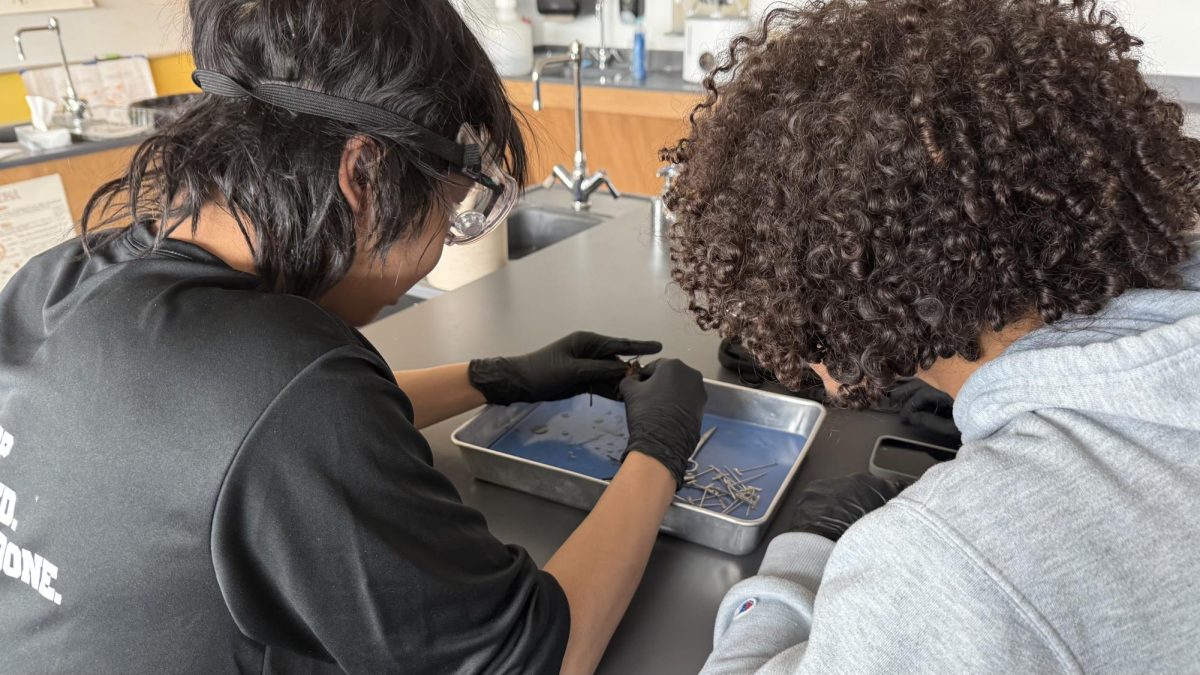
In UCONN ECE Biology 1108 class periods, students finished up their unit about the different characteristics and species of animals. To finish off the unit with a big bang, students were given the opportunity to dissect up to seven different animals per group.
Biology teacher Angela Norige believes that dissections can be very beneficial by allowing “students to see the firsthand internal anatomy of a lot of animals,” and by comparing different anatomies, students realize ẗhere are a lot of similarities across different organisms.
There were twelve different species of organisms being dissected, such as “crabs, crayfish, earthworms, various insects including grasshoppers, butterflies and bees, also sea cucumbers, sea stars, frogs, fish, and clams.” This diverse animal selection gave students the opportunity to choose the organisms they would like and gave students more freedom in this interaction.
Student Joshua Cruz had an enjoyable experience dissecting organisms with his group, stating that it was “not difficult to do.” Shortly after, he expressed frustration about the following assignment, believing that Norige was asking for “a lot of notes.” This shows that even with a fun activity, this is still a UCONN course, and there is still a heavy workload that comes with that.
Although Dissections were enjoyable, they weren’t always easy. Senior Matthew Tsai described the experience as “smelly but fun” and stated his group had to “redo some dissections.” Both students stated they had a harder time dissecting smaller organisms due to the precise cuts needed.